Vibe coding
Vibe coding won. What is left is deciding, steering and owning the result
Senior engineers told me they no longer write code. Here is what their job turned into, the agent ladder from chat tab to its own computer, and why imagination and decisions are now the bottleneck, not typing.
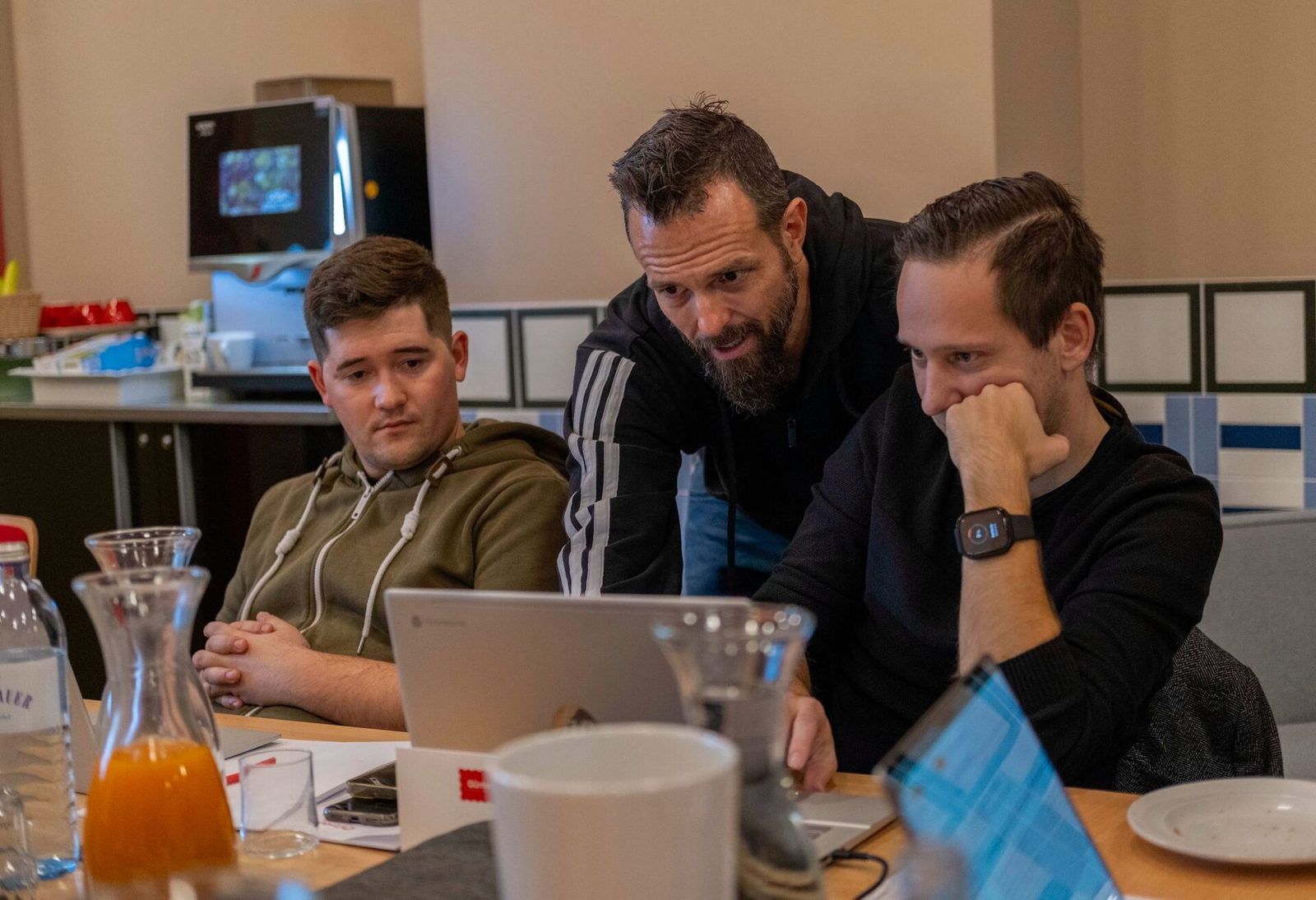
A few weeks ago I ran a technical SEO workshop with a team of senior engineers: backend, frontend, dev ops, fullstack. Two comments stuck:
“Actually we are not writing any code nowadays.”
“There is development pre Opus 4.7 and after.”
Senior devs, working full time. But writing the code themselves is disappearing from their working day. So what is their job now? Defining what is worth doing at all, and owning what goes out. The execution went to the agent. The defining, the imagining and the responsibility stayed, with every decision that comes with that.
So, “vibe coding” won.
I never liked the term
Andrej Karpathy (OpenAI co-founder, former head of AI at Tesla) coined it in February 2025. Simon Willison has the whole post:
There’s a new kind of coding I call “vibe coding”, where you fully give in to the vibes, embrace exponentials, and forget that the code even exists. […] I just see stuff, say stuff, run stuff, and copy paste stuff, and it mostly works.
It always sounded super dismissive to me. So I used other terms: AI-first problem solving, code-directing, agentic engineering. Much better words for what is actually happening, but sadly nobody asks me which terms win. Shocking, I know … (I didn’t like GEO either. What the f… is a generative engine? It stuck anyway. Sometimes my terms do win: targeted pages, I claim that one as my fame.) So yeah, we are stuck with vibe coding.
Vibe coding is agentic engineering
An agent is an AI that can do things. You give it a computer, tell it what you want, and it writes files, runs a terminal, uses a browser, fills out and submits forms, writes code, reviews code, tests what it builds, corrects it, and loops over this again and again. With the necessary access it deploys and ships the result: apps, automations, websites, other agents.
Code was always just text that gets executed by a computer somewhere. Turns out AIs are pretty good at creating it and, if you let them, pretty good at feeding it and its output back in as their own input.
We are not in 2023 anymore, when the AI just created text inside a chat window inside a browser window. Pretty soon it moved on to using tools: first “just” web search and reading webpages. Then … more.
The agent ladder: from a chat tab to its own computer
This is how I think about the evolution from AI chat to agent:
- Text LLM chat: text in, text out. You do the work.
- Chat with tools: web search, a code sandbox. The AI does parts of the work, you still move things between the chat and your working environment.
- Agent on a machine: files, terminal, tests, deployments. It works directly on the thing you want changed.
- Agent with your logins: access to your browser, your services, your working environment.
- Agent with its own accounts: its own mail, keys, 2FA. A separate user working for you.
- Several agents: subagents, teams, workflows. One lead, many workers.
- Agents on their own computers: always on, starting jobs from schedules or events, reporting back. AI agents as virtual “employees”.
Where does it all lead?
Shortly after Claude Code launched in May 2025 I installed it as admin/root on an old Linux laptop and let it run free. Just to see.
Now, in 2026, the AI on my computer, Claude Code, talks to Arthur Ficial (my old MacBook Air M2, at home) and to an always-on Hetzner server, also running Claude Code.
Arthur Ficial has its own prepaid debit card, limited to 200 EUR. It can, and does, spin up new server instances at will. It is onboarded into my company like an employee: own account, own login, own API keys. It has a job (ok, many), its own computer, and it makes its own decisions. And it spars with me when necessary. Via OpenRouter it also uses other AIs, like the Google ones, when it needs them or wants a second opinion.
Oh, and it is the maintainer of apfel, a GitHub repo with more than 6.5k stars (in November 2026).
The limits of AI I run into are mostly mine
I am constantly testing the limits of AI, and I keep running into my own limits before I find out how far the AI could take the task. Time. Money. The limits I put on it, or the organisations I work for. And my own creativity: catching myself thinking “AI can’t do that” before I have even tried. How would I know? I haven’t tried.
Priority: the creative mindset
Imagination and creativity become a main part of everybody’s job when we can hand over the execution. What could we try, what would actually make things better? It is a skill we have to relearn, because we spent years training ourselves out of it:
- “Too expensive.”
- “Too technical.”
- “No development resources.”
- “Maybe next year.”
- “I don’t know how.”
Every one of those excuses is bullshit now. But we learned to kill our own ideas before saying them out loud. Now we need to practise imagining things again, and actually try them. Including finding out that the idea was rubbish. Fine. Now we know. Next one.
Trying costs time and money, and somebody has to give you access. If every experiment needs three meetings and somebody else’s development resources, we have put the old limitations right back in place.
Then there are the organisational limits: law, access, logins, internal rules. Almost four years after ChatGPT we are still working out what AI may do inside our organisations. Define those limits deliberately and write them down. The agent needs to know what it can decide, what it can change, and when it needs you. People need that clarity too. And once the limits are written down, they are much easier to challenge.
And then challenge them. Again and again. Is this rule really about law, security, the customer? Or is it just the old “this is how things work here” creeping back in? A lot of limits are habits with a policy name on them (I have written a few of those myself, for quite a few organisations …). If nobody can say why a limit exists, discard it and see what happens. If there is a reason, challenge the reasoning.
Fifty decisions before breakfast
And then there is time. The more work you hand over, the more obvious it gets who is holding it up: the user. In Anthropic’s study on how employment is changing at Anthropic, interactive AI agent hours outnumbered employee hours six to one by August 2026, and Claude sessions spent around 80% of their time idly waiting for human input.
Your agents keep implementing and testing, but they need a decision. Then another one. Then three at once. Because there are decisions, and there always will be. The more you hand over, the more you decide. You stop getting tired from typing and start getting crushed by fifty impactful decisions before breakfast.
Handing over the work fills your day with decisions, and creativity gets none of it. So you have to decide which decisions the agent makes without you, what it verifies itself, and what deserves your attention. Otherwise we replace a day of execution with a day of answering agents.
AI cloning Adobe Photoshop is … boring
What interests me: inventing the future, doing things that were previously impossible. And what is impossible differs from person to person, from team to team, from organisation to organisation … and then you push it beyond.
Then came the big news in October 2026: a developer cloned the Adobe suite with AI, Photoshop included. So what? That is clinging to the past instead of inventing the future. It is not creative. It is … boring!
Adobe has patents and lawyers, they have their business covered, at least in the short term. But does it even matter anymore? Photoshop’s biggest competition was Canva. And now Canva has a problem, because AI makes everyday photo editing so easy that you don’t need Canva either.
Even with all the access, our imagination gets stuck on what we already know. Buttons. Menus. Dashboards. Another SaaS product. Those interfaces exist for humans: eyes and fingers need something to see and click. An agent with access to the system writes a temporary script, changes the pixels or the database rows directly, verifies the result, deletes the script. So why does every idea have to become another app with buttons? What is so great about clicking buttons?
Pushing those limits has always been my role: for creativity, for creation, for profit, for fun. That is how I got into SEO in the first place.
Karpathy moved on too: agentic engineering
In February 2026 Karpathy came back to the terminology himself: agentic engineering, his preferred term for professional work with coding agents. You orchestrate agents and act as oversight, and it is something you can learn and get better at. Much closer to what my workshop engineers were describing.
The code still needs to work. Someone has to understand the problem, choose an approach, define what good looks like and check whether the result is good enough. AI gets things wrong. Spotting that and deciding what to do next is the job. Last year, in my lecture at FH JOANNEUM, I told the students: nobody cares anymore how good your tab-opening skills are. Your experience becomes the questions you ask and the standard you judge the answers by.
So yeah, we are all “vibe coders” now. But what we are actually learning is how to direct work we no longer have to carry out ourselves, and how to take responsibility for the outcome.
Going AI first with SEO was inevitable, and freeing
If you spent twenty years getting good at something, handing parts of it over feels strange, threatening … (I know, I did it with SEO!) But when you accept the inevitable, it gets … freeing! Suddenly you can chase the idea you dismissed, the thread you never followed, the detail you replaced with a general rule because going into it was never feasible. One example: with AI I figured out a completely new Google JavaScript rendering error scenario. I now call it “destructive hydration”.
Our roles change step by step. What stays with me: deciding what to try, steering the agents, checking what they built, taking the blame when it goes live. And the humans (clients, teams, the workshop room) still want a human. It stays my work. And it stays my responsibility whether the client or participant is happy.
“Actually we are not writing any code nowadays.” Those engineers still solve the same problems, they just stopped typing the solution. What they can attempt went up, and their attention moved from the code to the decisions. In my workshops the same thing happens when someone tries what they thought was beyond them: “It just works.” “I can do this.”
And then comes the real question: what are you going to do with it? Start with the one idea you killed years ago because it was “too expensive”.

About the author: Franz Enzenhofer. Practitioner. Author. Trainer.
- SEO since 2004
- Author of the book "Understanding SEO"
- AI First since 2022
Sources
The claims in this article rest on these sources.
- Franz Enzenhofer newsletter, 2026-11-05: Thoughts: Vibe Coding won.
- Simon Willison, Not all AI-assisted programming is vibe coding (but vibe coding rocks), quoting Karpathy's original vibe coding post
- Anthropic, How employment is changing at Anthropic (agent hours vs employee hours, time spent waiting for human input)
- apfel on GitHub, maintained by Arthur Ficial
- Andrej Karpathy on X, 4 February 2026: agentic engineering
Image credits
- Workshop photo from everfranz.franzai.com